06 — Carbon & fiberglass
Composite blades: carbon and fiberglass freediving fins
This is where fins stop being equipment and start being performance. A composite blade flexes smoothly under load and returns that energy in a clean snap instead of losing it to internal damping — less effort per kick, less lactic build-up, more depth or distance on the same breath.
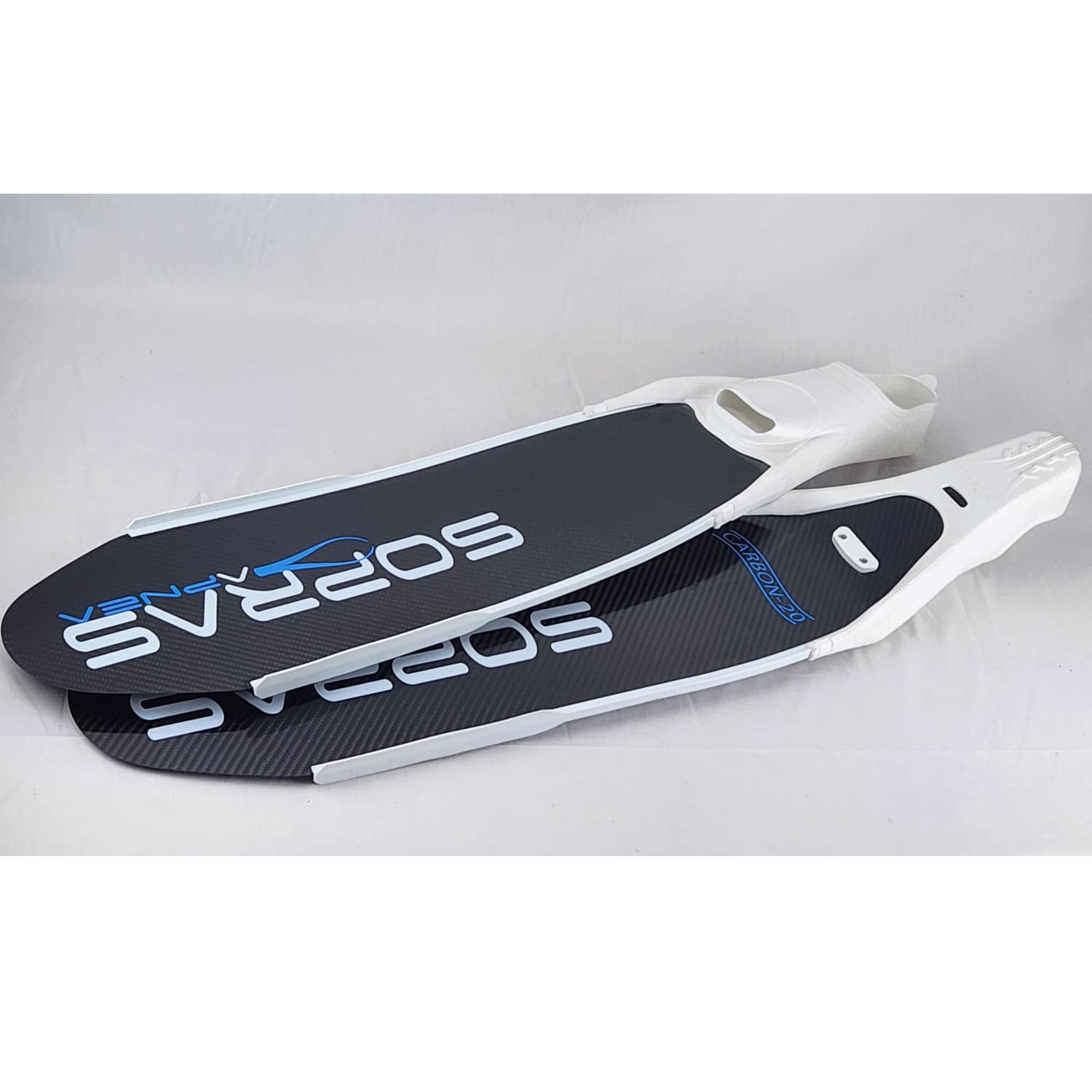
- Carbon
- Lightest, crispest return — and the most fragile
- Fiberglass
- Most of the benefit, far more forgiving
- Stiffness
- Match to body weight and leg strength, not ego
- Blade angle
- Typically 20–30° to the foot pocket
Carbon or fiberglass — an honest answer
Carbon is lighter, quicker and more efficient at the same stiffness, and an experienced diver feels it immediately. It is also more expensive and genuinely vulnerable to point loads and impact. Fiberglass gives you most of that performance with far better durability — which is why it's often the smarter first composite fin, and why the camo fiberglass HF 200 suits spearfishers working around rock and boats.
Getting stiffness right
Stiffness is not a quality ranking, it's a match. A heavier or more powerful diver collapses a soft blade past its efficient range; a lighter diver never loads a hard blade enough to make it return energy. Soft suits lighter divers and pool cadence; medium is the all-round choice for most depth freedivers; hard suits heavier or weighted divers. When torn between two grades, take the softer one — a slightly soft blade still returns energy, an under-loaded stiff blade just wastes effort.
Protect the blade in transit
Most composite blades die in a car boot, not in the water. Use a fin bag with rigid or padded blade protection, never stack gear on the blades, never step on one. A cracked carbon blade is rarely economical to repair.
Composite models
4 models · sold on soprasapnea.com


First composite fin? Fiberglass, medium stiffness, and a bag with blade protection. That combination is very hard to regret.
See all composite fins